Connecticut’s $121M Quantum Leap

Connecticut is stepping up its commitment to investing in quantum technology.

The Lamont administration announced it’s pledging up to $121 million dollars to expand quantum infrastructure, workforce, and research capacity.

“This is a Silicon Valley-like moment,” Department of Economic and Community Development commissioner Daniel O’Keefe said announcing the investment Nov. 21 at Yale University.

“The time to prepare our state, to lay the groundwork for our future and to prepare our workforce is now.

“And I believe Connecticut is uniquely positioned to lead.”

‘In our DNA’

Gov. Ned Lamont said the state funds will strengthen Connecticut’s long-standing reputation as a leader in innovation.  

“Connecticut has always been the most innovative state in the country,” Lamont said. “This is in our DNA.”

“Through quantum innovation, Connecticut has an opportunity to enhance that legacy and lead in emerging fields like cybersecurity, drug discovery, and advanced computing.”

The investment will support QuantumCT, a nonprofit partnership led by Yale University and the University of Connecticut.

QuantumCT’s mission is to drive regional innovation and economic growth through the adoption of quantum technologies.

The organization—which includes public and private partners such as CBIA—is in the final stages of a National Science Foundation competition with awards of up to $160 million.

Quantum Infrastructure

The $121 million state investment includes $50 million to expand the Connecticut’s quantum infrastructure.

That includes the launch of the QuantumCT incubator in New Haven—a first-of-its-kind fully functional deep-tech hub on Yale’s campus in New Haven.

That funding complements a recently announced $10 million from the state’s Innovation Clusters Program.

“By building an incubator alongside advanced prototyping and engineering facilities, we are giving startups and industry the ability to design, validate, and iterate new quantum technologies in real time,” said QuantumCT president and CEO Albert Green.

“The QuantumCT incubator will position Connecticut as a destination for deep tech experimentation and breakthrough development.”

If Connecticut wins the NSF competition, the state will provide an additional $60 million in funding.

Investing in the Future

State officials said quantum technology is key to Connecticut’s economic future and workforce.

“If you look at our core industries, things like advanced manufacturing in support our national defense, things like cryptography, if you look at things like financial technology, if you look at insurance technologies, if you look at health care, biotech, the emergence of quantum will accelerate innovation in every single one of those industries,” O’Keefe said.  

Both UConn and Yale have ramped up quantum initiatives in recent years, investing in new facilities, laboratories, and research capabilities.

“The future of Connecticut’s workforce depends heavily on our ability to embrace quantum by maximizing our research capacity and teaching important skillsets to students and workers of all ages,” said UConn interim provost Pamir Alpay.

“By building shared infrastructure and training the next generation of innovators, we can ensure that quantum technologies take root and grow here in New Haven and throughout Connecticut,” Yale University vice provost for research Michael Crair said.

The Full Article can be found at CBIA

Boosting CT Economy Through Utility Partnerships

Connecticut has much to be proud of in the most recent CNBC “2025 Best States for Business” rankings, which have been rightfully promoted by the likes of Gov. Ned Lamont and state Sen. Bob Duff, D-Norwalk, as the state achieved high marks for critical metrics including quality of life and its cultivation of a skilled workforce. However, when it comes to the state’s overall economy and infrastructure needed to support it, it’s clear that Connecticut has room to grow and further collaborate with the private sector to make the state even more attractive to prospective companies and provide groundwork for future job growth.

The good news? Connecticut has a reliable grid thanks to decades of consistent investment and partnership at the federal, state, and local levels. If we can build on those examples of collaboration and make the investments necessary for modern power needs, we can unleash economic activity and show the world what makes our state a leader.

Development and electric demand: A clear link

Economic development and increased electric demand growth have always gone hand-in-hand, and if we want to continue to spur economic activity in Connecticut, we must have a modern electric grid with sufficient headroom to proactively accommodate the growth in demand that comes with booming commercial and industrial sectors. If you look at states such as Virginia, North Carolina and Georgia — which were all named among CNBC’s top-10 best states for business — they are experiencing exponential electric demand growth primarily driven by a combination of data center development and economic expansion. All three states also have another key ingredient that gives them a competitive advantage in the eyes of new businesses: collaborative regulatory paradigms that support such strategic utility investments, which is essential for enabling economic development.

The proof is in the projections. Here’s a closer look at how these states are actively preparing to accommodate soaring electric demand from data centers and new businesses:   

  • Georgia Power projects an 8,200 megawatt increase in electric demand by 2031. The utility’s 10-year modernization plan includes improvements across more than 1,000 miles of transmission lines, expanding solar, storage, and investing in nuclear, natural gas, coal, and hydropower to help meet the surge.
  • In Virginia, electric demand from data centers alone is projected to exceed 7,000 Megawatts by 2032. Dominion Energy is partnering with other regional utilities to build $4.6 billion in transmission infrastructure that will help support the spike in demand as the state explores other diversified energy strategies.
  • North Carolina utilities are focusing on transmission upgrades and new distributed energy resources to support economic development and maintain reliability as the state anticipates a 12% rise in electric demand by 2038.

These demand growth projections are like adding the entire state of Connecticut’s demand and then some to their respective states’ current peak electric demands. In Connecticut, ISO-NE is projecting a 590 Megawatt increase in demand growth over the next 10 years, substantially lagging behind the electric demand growth projections seen in the states where commercial and industrial growth is booming. A collaborative and constructive regulatory environment can and will help flip the script — one that is focused on pro-growth policies that can help attract more companies by accelerating the infrastructure expansion needed to support them.


How Conn. can catch up

While we’ve taken steps toward grid modernization, the pace must quicken if we want to compete nationally for new businesses and jobs — especially given the length of time it takes to engineer, permit, procure and construct electric grid infrastructure at scale. Though Connecticut may be small when it comes to square mileage, the opportunities are massive when it comes to private development and siting. If the state were to take a strategic, collaborative approach to address future economic and utility needs, it can unlock a host of economic activity which will drive up property tax revenues, grow jobs in manufacturing and high-tech sectors, while also improving utility reliability and resilience in these areas – bringing direct benefits to Connecticut residents.

Massachusetts, which ranked among CNBC’s top-20 best states for business, is already taking this approach. The commonwealth is leading the way with its grid planning process, which features an additional layer of transparency and engagement through its Grid Modernization Advisory Council (GMAC) — a layer that is visibly missing in Connecticut and one the state could significantly benefit from. This collaborative working group brings multiple stakeholders to the table to strategically plan future grid enhancements to meet the Commonwealth’s policy objectives, where no individual contributor is viewed as more of a friend or foe, but instead an important voice which must be heard to reach shared goals of sustainable growth and opportunity. The GMAC provides state regulators in Massachusetts with deep insights, perspectives, and specific recommendations on how to modernize and upgrade the electric grid efficiently and cost-effectively at scale, and regulators consider that input in their final decisions on any future investments. Connecticut continues to lack a comprehensive energy policy, which is imperative for utilities to develop specific grid plans by specific time frames that are backed by legislative mandates. Having a dedicated body focused on stakeholder engagement and transparency that clearly connect policy objectives to grid plans, has allowed Massachusetts to take strategic action toward reaching its electrification goals and has helped position the state as a leader in economic development in New England — and Connecticut could learn valuable lessons from this approach.

A path forward for smart development

We don’t have to look far to find a roadmap. States that embrace regulatory clarity, strong collaboration and infrastructure investment are thriving. It’s time Connecticut joins them.

Let’s build on our strengths and remove the barriers standing in the way of investment. If we bring our regulators, policymakers, and utilities to the same table — with the same goal — we can make Connecticut a beacon of innovation, resilience, and opportunity for generations to come.

Digaunto Chatterjee is Eversource’s senior vice president of engineering.

The Full Article can be found at MSN

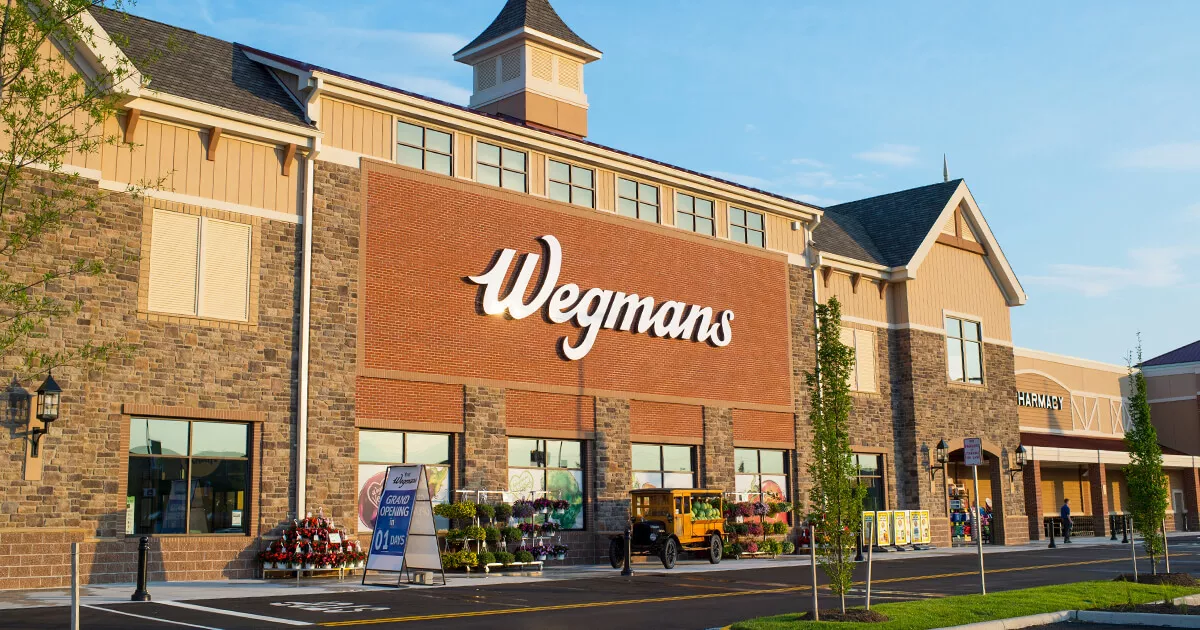
Wegmans Moves Into CT

The wait is over – the long-anticipated opening of Wegmans’ first Connecticut location happened on Wednesday! The family-owned regional supermarket has planted its roots in Norwalk.

The location is right off of Route 1. It’s exactly what Wegmans employees said they were looking for. The building sits at 92,000 square feet.

Inside, the store is filled with fresh produce, pre-prepped meals and 500 employees who will be delivering customer service the company is nationally known for.

Originating in the 1900s in Rochester, New York, Wegmans has more than 100 locations on the East Coast with a new one opening in Maryland last month.

While they’ve been hiring for their Norwalk store for the last year, there is still one position open for a main cook listed on the company’s website.

The new store also sits less than four miles away from Connecticut’s own Stew Leonard’s.

For consumers, the competition could help.

“If you’re a CT consumer, this is good news in terms of shopping choices, but also in terms of competitive pricing,” said Wayne Pesce, of the CT Food Association.

The store opened to customers at 9 a.m. on Wednesday. Regular store hours will begin on Thursday where the store will be open from 6 a.m. until midnight all week.

The store is located at 675 Connecticut Ave. in Norwalk.

The Full Article can be found at NBC-CT

Energy Reform Clears House 144-3

In one of the most widely anticipated legislative actions this session, the Connecticut House of Representatives passed Senate Bill 4 on Tuesday night with a bipartisan 144-3 vote. The wide-ranging legislation seeks to lower electricity rates, modernize the electric grid, expand oversight of utility companies and prepare for a decarbonized energy future.

The Senate had approved the measure 34-1 on Monday. It now heads to Gov. Ned Lamont, who has confirmed he will sign it.

“Like many people, I think electric bills are too damn high, and this bipartisan bill is a first step in addressing a complex issue,” Lamont said in a written statement, “This legislation is one step in the effort to make energy rates more affordable and we should not stop here.”

Lamont credited lawmakers in both parties for their collaboration and added, “Let’s keep doing more to reduce electric rates.”

House Energy and Technology Committee Chair Jonathan Steinberg, D-Westport, who spearheaded the legislation in the House, said SB 4 reflects years of work to address constituent frustration with utility costs.

“This is the bill we’ve all been talking about, we’ve all been waiting for. It’s finally here,” Steinberg said. “The bill has three A’s: affordability, access, and accountability.”

He pointed to approximately $100 million in annual savings through reduced public benefits charges, with total savings estimated near $300 million due to combined reforms.

“These are not wholesale cuts,” he said. “We’re redirecting and optimizing.”

The bill establishes a new state-funded Energy Assistance Account that will use up to $250 million in bonding to support hardship programs previously paid through electric bills. It also authorizes utilities to procure up to 25% of standard service supply from short-term or “dynamic” markets, a departure from the existing procurement model.

Steinberg said this flexibility could help avoid overpaying when energy markets shift rapidly.

The bill also finances the rollout of Advanced Metering Infrastructure, known as “smart meters,” and mandates the integration of grid-enhancing technologies. PURA will be allowed to authorize cost recovery for AMI if proven beneficial to ratepayers.

Finally, the bill allocates $5 million for nuclear site readiness, aligning with Connecticut’s 100% zero carbon electricity goal by 2040. It also expands renewable energy tariffs and limits behind-the-meter program access based on income levels and equity metrics.

Rep. Tracy Marra, R-Darien, said the bill puts affordability first.

“We … looked at how electric companies can purchase energy in better, more dynamic ways,” she said. “We believe we can see savings there.”

She also noted the $5 million for nuclear readiness.

“It’s not going to happen in the next five years, but we’re laying the groundwork now,” she said.

Wallingford Democrat Mary Mushinsky said Connecticut must prepare for growing demand.

“Climate change, hot summers, and data centers are changing the equation,” she said. “We need to plan now.”

Only three representatives: Mark DeCaprio, R-Shelton; Gale Mastrofrancesco, R-Wolcott; and Karen Reddington-Hughes, R-Woodbury voted against SB 4. Four members, Reps. Donna Veach, R-Berlin, Chris Stewart, R-Putnam, Brian Lanoue, R-Griswold, and Brandon Chafee, D-Middletown were absent or did not vote.

According to the Lamont’s press office, the nearly $400 million in projected annual savings builds on a recent 25% reduction in the public benefits charge approved by PURA in May, and precedes an additional 13% supply rate reduction set for July 1.

The Full Article can be found at WSHU.

CT grocers worried about Trump tariffs

Connecticut grocers are concerned that President Donald Trump’s tariff war will lead to higher food prices for consumers.

Wayne Pesce, president of the Connecticut Food Association, a trade group representing most of the state’s food retailers, said the state’s consumers are already paying 20% more for groceries than they did four years ago.

“These tariffs are almost to the point where it’s piling on in terms of affordability and people having to stretch their budgets to feed their families,” Pesce said at an appearance with U.S. Sen. Richard Blumenthal (D-CT) at Edge of the Woods Market in New Haven on Wednesday.

Pesce said there are also other factors affecting groceries.

“There is, you know, olive oil increases because of drought in the Mediterranean. There are problems with coffee because of the Sub-Saharan drought in Africa. Add tariffs and you are just making a really difficult situation more difficult.”

“I’m not sure that people are going to be willing to pay the prices that are going to be on our shelves,” said Peter Dodge, owner of the market.

That’s because any price increase caused by tariffs would be passed onto consumers, he said.

The Full Article can be found at WSHU.

DEEP Expands Energy Efficiency Efforts for Businesses & Residents

Draft Request for Proposals Incorporates On-Bill Financing Approaches and Other Enhancements to Expand Access to Energy Efficiency for Eversource and UI Customers

(HARTFORD)- As noted in Governor Lamont’s State of the State address in January, the Connecticut Department of Energy and Environmental Protection (DEEP) is conducting a competitive Request for Proposals (RFP) to invite bids from efficiency suppliers to expand access to electric efficiency for United Illuminating (UI) and Eversource customers.  This week, as part of the RFP process, DEEP released an updated schedule and expanded scope for its electric efficiency and affordability procurement. The initial draft request for proposals (RFP) was focused on energy efficiency measures delivered to residential customers. In response to bidder requests, DEEP is now expanding the RFP scope by clarifying that interested bidders could include energy efficiency measures for commercial and industrial customers, as well as residential customers. In addition, interested bidders would be permitted to use the customer’s electric bill to collect payments from the participating customers to pay for the installed measures over a period of time if those payments are less than the expected savings from the efficiency measures.

Electric efficiency is a powerful tool for lowering energy bills for both households and businesses and is among the lowest cost resources available to meet Connecticut’s growing energy needs. The aim of efficiency is to deliver the same or better energy services to customers while helping avoid the need to build costly new electric generation and distribution infrastructure that would otherwise be required to meet the needs of our electric grid, lowering the cost of electricity for all ratepayers in the state. Efficiency is also key to a clean electric grid because it reduces waste, avoids unnecessary infrastructure, and lowers reliance on imported, price-volatile fossil fuels. 

Last year, DEEP released a draft RFP and sought feedback from interested stakeholders. Based on this feedback, DEEP is amending the scope of the RFP to expand the opportunity and make it easier for participating customers to repay bidders over time. The RFP will now seek proposals for passive demand response measures for commercial and industrial customers, in addition to residential customers, which can include measures installed at the premises of one customer, such as a commercial or industrial customer that meets the minimum size requirements, or a bidder that aggregates more than one residential, commercial, and/or industrial customer, or any combination of those customers. Entities eligible to respond to the RFP include individual building owners interested in installing passive demand response measures, and entities that can aggregate the installation of measures across multiple properties to meet the minimum size requirements.

Further, bidders will now be able to propose a structure for repayment that uses a participating customer’s electric bill to recover the costs of the installed measures through an on-bill charge to the participating customers that is less than the estimated savings from the installed measures to the customer, provided that this on-bill charge to the customer is only used to recover the costs associated with installing the measures at the customer’s premises. This structure was supported by many commenters on the draft request for proposals and has been successfully implemented in other jurisdictions.

“Energy efficiency continues to be the cheapest and most crucial solution to electricity reliability and affordability in our state,” said Governor Ned Lamont.

“DEEP is encouraged by the robust response to our RFI from potential bidders, and is pleased to be incorporating improvements to the RFP to make efficiency a more affordable and convenient option for residents and businesses alike,” said DEEP Commissioner Katie Dykes. “Reliable and affordable electricity is how we continue to attract businesses to our state and how we ensure that hardworking people keep more of what they earn in their own pocket. Increasing energy efficiency will not only lower electricity bills for the residents and businesses who participate, but also keep electricity supply costs down for all ratepayers.”

Since 1998, Connecticut has been investing in energy efficiency through the state’s Conservation & Load Management (C&LM) programs. C&LM program investments in 2025 alone are projected to save Connecticut electric and gas ratepayers over $588 million on their bills over the lifetime of the installed efficiency measures. Individual residents participating in the C&LM programs lower their energy bills by $180 per year on average thanks to air sealing and pipe insulation provided through an initial audit and get customized recommendations for further upgrades that can save them hundreds of dollars more.  

Since 2019, consumer demand for the state’s C&LM programs has grown by 40% and now exceeds the level that can be met within the programs’ budget levels. DEEP is working with Connecticut’s regulated gas and electric utilities, which implement the C&LM programs, and the state’s Energy Efficiency Board to further optimize the C&LM programs to support increasing levels of efficiency demand. DEEP is also coordinating the implementation of nearly $100 million in federal funding for energy efficiency through the Home Energy Rebates (HER) and Home Electrification and Appliance Rebate (HEAR) programs with the C&LM programs, which will deliver further benefits to Connecticut ratepayers.  

Even with C&LM optimization and this federal funding, however, DEEP anticipates there will continue to be opportunities to scale up investment in cost-effective energy efficiency beyond the levels that the C&LM programs will be able to support. In addition, New England’s independent regional grid operator, ISO New England, projects that over the next 10 years regional demand for electricity will grow by 17 percent, including a 32 percent increase in winter peak demand, due to economic growth and increased adoption of electric vehicles and heat pumps. This growth will necessitate investments in energy resources that can affordably and reliably meet demand. Energy efficiency is among the lowest cost, cleanest, and quickest options to deploy resources available to help meet these needs. 

As the next step in the Expanded Electric Efficiency and Affordability RFP, DEEP will hold a technical meeting for potential bidders in advance of releasing the final RFP, on February 11, 2025 at 1:00 pm ET, to ensure there is a shared understanding of the flow of payments contemplated in this RFP and to ensure the RFP language is consistent with the shared understanding. Registration is available here.

Further, DEEP is seeking additional written comments from stakeholders, due by February 18, 2025 by 4:00pm ET, regarding the draft RFP and the revised scope discussed above. Given that this expansion of the draft RFP newly includes eligibility for commercial and industrial passive electric demand response, DEEP is particularly interested in hearing from potential bidders, and potential commercial and industrial customers who may receive efficiency measures through this RFP, with respect to questions and feedback about how to ensure that this RFP can effectively enable demand reduction and bill savings for the commercial and industrial sector, as well as the residential customer classes that were originally the exclusive focus of this RFP. 

Comments received from stakeholders in response to the draft RFP will inform development of a final RFP, which DEEP anticipates releasing in March 2025, with bids due in May 2025. DEEP anticipates announcing a decision on the selection of energy efficiency proposals submitted in response to the RFP in July 2025. 

The Expanded Electric Efficiency and Affordability RFP is being conducted pursuant to Conn. Gen. Stat. §16a-3j, which provides DEEP with authority to procure electric energy efficiency measures that either singly or through aggregation reduce electric demand by one megawatt or more. The maximum estimated procurement authority remaining under Conn. Gen. Stat. §16a-3j is approximately 2 million megawatt-hours per year. 

Original article found at the Connecticut Department of Energy & Environmental Protection

The Big CT Food Event 3/1/25

The upcoming Big Connecticut Food Event will take place on Saturday 3/1/25 at the Yale School of Management in New Haven.

The Big Connecticut Food Event is an annual one-day event that gathers CPG/wholesale-focused food & beverage brands and other key stakeholders spanning the Connecticut food entrepreneurship ecosystem to network, share ideas, and showcase products and services.

Our goal is to support the development of the state’s entrepreneurship pipeline so it produces multiple food and beverage brands each year that exceed $2mil in annual sales.

Event content

  • 💰 $50k+ pitch competition for 5 finalist emerging Connecticut brands
  • 🥫 Sampling and tabling from 30+ emerging Connecticut brands and solutions providers
  • 🤝 One-on-one coaching sessions between brands and industry experts
  • 🎤 Panel discussions with industry leaders

Participation opportunities

  • Food & bev brands (based in CT) — Pitch competition, tabling & sampling, expert coaching participant, attendee, sponsor
  • Food & bev brands (based outside CT) — Expert coaching participant, attendee, sponsor
  • Solutions providers to food & bev brands (co-manufacturers, packaging designers, legal and financial service providers, etc.) — Expert coaching coach, sponsor, attendee
  • Grocery and foodservice procurement leaders — Pitch competition judge, panelist, sponsor
  • Not-for-profit organizations (mission-aligned, regionally-based) — Tabling
  • Industry leaders and policymakers — Panelist, pitch competition judge
  • The food-curious public — Attendee

Save the date! The third annual Big Connecticut Food Event is returning on Saturday 3/1/25 at the Yale School of Management in New Haven. Get an attendee ticket here.

More information about this event can be found here.

Affordability and High Energy Costs dominate as CT Legislation Session begins

Less than two weeks before President-elect Donald Trump is set to take office, Connecticut’s General Assembly reconvened for its 2025 legislative session. For nearly five months, the part-time legislature will discuss bills, hear public testimony and vote on legislation in committee and on the House and Senate floor. Lawmakers will also decide on the state’s next two-year budget.

The session began Wednesday with Connecticut Gov. Ned Lamont’s State of the State address at the Capitol in Hartford.

The two-term Democratic governor will present lawmakers with a budget proposal in the coming weeks.

“And always, our north stars will be affordability and opportunity, holding down costs of energy and education, allowing you to keep more of what you earn and providing you the tools you need to earn more, to buy a home, start a business,” Lamont said during his address.

Lawmakers must end the regular session business by midnight on June 4.

High cost of power dominates early parts of Lamont’s speech

Affordability and the high cost of electricity in Connecticut dominated the early parts of Lamont’s speech to lawmakers, with the governor saying expensive power impacts everyone from families to small business owners.

“They’re asking me about the reliability and affordability of electricity, as everything we do gets more energy intensive,” Lamont said.

Lamont said the state needs to increase its supplyof low-carbon energy, but Connecticut continues to rely on two major staples for its electircal supply: natural gas and nuclear energy, the latter of which accounts for about one-third of in-state electricity.

Nuclear energy raises concern among environmentalists

Lamont hinted during his speech Wednesday that nuclear power could grow in Connecticut.

“Nuclear power that provides most of our carbon-free power,” he said. “Right now, we’re working with the federal government to find ways to expand nuclear capacity in Connecticut.”

But environmental groups immediately voiced that the state needs to focus more on renewable energy options, not more nuclear power.

“Offshore wind is, was and will continue to be a huge part of getting us to our emissions goals that both the Governor and the legislature and the public have adopted,” Lori Brown, executive director of the Connecticut League of Conservation Voters, said at the Capitol. “And we cannot afford to slide back from that.”

Last month, the state officially opted out of buying into a new offshore wind project with Massachusetts and Rhode Island. Lamont told Connecticut Public’s “The Wheelhouse” in December that the project ended from concern over cost to ratepayers.

Charles Rothenberger, a climate and energy attorney at Save the Sound, also expressed concern about the state depending more on more nuclear energy.

“I don’t believe it is a cheaper alternative to actual clean renewable energy,” Rothenberger said, citing offshore wind and solar as alternatives. “And those are projects that could come online much more quickly to help serve our needs, improving the resilience of the grid and lowering costs for customers.”

State lawmakers decry federal ‘chaos’

Democrats hold an overwhelming majority in both houses of the General Assembly.

During remarks Wednesday, Democratic House Speaker Matt Ritter urged legislators to work in a bipartisan fashion, in contrast to what he said happens in Washington D.C., as well as in many other state governments.

“People get elected and they have new majorities,” Ritter said. “There’s a new majority in D.C.; there’s a new majority here … and the first thing that they plan to do is find ways to eliminate all of the opposition’s power.”

Everyone is frustrated by federal lawmakers who risk chaos, said Vincent Candelora, Connecticut House Republican Minority Leader. He said he watched the recent election of U.S. House Speaker Mike Johnson when the election of the speaker was in question.

“It struck me that either party would stand and allow potentially an institution to be put into chaos and jeopardy for political gain,” Candelora said. “And I think time and again we see that on the federal level.”

A ‘cheeky’ touch of CT showmanship

Name-checking Connecticut showman P.T. Barnum during his address, Lamont acknowledged a touch of hyperbole in the state’s recent rollout of road signs declaring Connecticut the “pizza” and “basketball” capital of the world.

Lamont said those signs attracted a lot of attention.

“Some people thought the signs were a little cheeky. Italy questioned our claim to be the pizza capital. The Boston Celtics wondered about the basketball capital,” Lamont joked. “But as a great showman, and Connecticut state representative, P.T. Barnum famously said, ‘I don’t care what they say about me, as long as they spell my name right.’ And they’re talking about Connecticut.”

Lamont says he wants to continue efforts to raise the state’s profile.

Over the holidays, Connecticut leaned into its role as a Hallmark movie backdrop, launching a Christmas Movie Trail to highlight spots from movies filmed in the state.

This session is fundamentally different from last year’s

This session is a “long” one, as outlined by the state’s Constitution. In odd-numbered years, the governor’s office and state lawmakers must agree on a new two-year budget.

That means this year, Lamont must present his proposed state budget and bond package to lawmakers by Feb. 5. That sets off a month-long process to negotiate and finalize, which in the end requires a simple majority in both chambers, where Democrats hold a majority, along with the governor’s signature for approval.

The 2025 session will be nearly two months longer than the “short” session in even-numbered years, when lawmakers usually adjust the budget. Last year, things turned out a little differently when Lamont and other Democratic lawmakers assigned expiring American Rescue Plan Act (ARPA) dollars to help programs, rather than formally adjusting the budget.

Expect some debate on state’s fiscal guardrails

These constraints, first enacted in 2017, are a complex set of rules for how much lawmakers can spend. Connecticut has been able to pay down pension debt and has seen state budget surpluses under the guardrails, but there has also been considerable debate among some lawmakers about the need to change these policies. Advocates and lawmakers who want to see the guardrails loosened say they want to see more state money for health care, child care and education.

Lamont said he wanted to keep the guardrails during a December appearance on Connecticut Public’s “The Wheelhouse.” Some Republicans have also echoed a desire to keep the guardrails in place.

Top leaders are the same

Democrats still hold a comfortable majority in both state legislative chambers.

Ritter will return to lead the chamber alongside Majority Leader Jason Rojas. Candelora will return as House Minority Leader. Martin Looney and Bob Duff return as Senate Pro Tem and Majority Leader, respectively. And State Sen. Stephen Harding will return for his second year as Republican Minority Leader.

Bills, bills, bills

Over half a dozen of the nearly 30 committees have new House leaders. Legislative committees drive policy debate among lawmakers and engage the public on specific issues like education, health care and the environment. This year, there is a new committee on government oversight and a select committee on special education.

While many bills are proposed each year by lawmakers, comparatively few become law. That’s because there is a specific process for how most bills become a law, which the Connecticut General Assembly learning center explains. (Think: ”Schoolhouse Rock’s” “I’m Just a Bill” sans music).

There are also a number of different types of bills. Some come out of committees or are introduced by individual lawmakers or groups of lawmakers, or the governor. Among the many topics that will likely come up this session:

Ways to get involved

Committees will hold public hearings, where people can make their voices heard in a few ways. That can be through written testimony on the CGA website – or speaking at the public hearing, Public hearings are also often broadcast online.

There’s also a bill tracking system – that’s not just for reporters and stakeholders! Anyone can sign up to see how a bill is progressing.

Original article found at CT Public Radio.

National Grocers Association Applauds Congressional Action to Protect Grocers and SNAP Participants

Washington, D.C. –  The National Grocers Association (NGA) today applauds members of Congress forsafeguarding the Supplemental Nutrition Assistance Program (SNAP) in the FY 2025 agriculture appropriations bill by removing a provision that would have led to widespread disruptions and undermined SNAP’s effectiveness.

A proposal dropped from the final bill would have created a five-state pilot to significantly limit the types of foods covered under SNAP, forcing grocers to examine hundreds of thousands of food items to determine which qualify and which don’t. The proposed pilot program would have allowed five state governments to pick winners and losers in the grocery sector, harming the 42 million SNAP participants who have diverse nutritional needs.

“Fortunately, members of Congress realized that a proposal that looked simple on paper would have created confusion for program participants and resulted in a costly bureaucratic nightmare for small businesses around this country,” said Stephanie Johnson, RDN, NGA vice president of government relations. “The strength of SNAP lies in its efficient and flexible design. We are proud to support the continuation of an effective and impactful program for families and local economies.”

The successful amendment, offered by Congressman Sanford Bishop, removed a pilot project that would have restricted SNAP purchases  of “non-nutritious food or beverage items” in five states, a potentially disastrous policy that would have turned grocers into the food police. Members Bishop, DeLauro, Espaillat, and Watson-Coleman spoke in favor of keeping SNAP Choice, the current policy providing participants the freedom to purchase what is right for their families. The amendment passed via voice vote after a robust lobbying effort from NGA.

NGA is also pleased to see that the Senate passed an agriculture appropriations bill without any new restrictions on SNAP purchases.

This victory follows NGA’s commitment to making SNAP choice a key issue during our Fly-In for Fair Competition. Credit also goes to the NGA Grocery Guard, who, at a moment’s notice, reached out to House Appropriators urging support for the amendment.

Original article found at National Grocers Association.

What are the most popular grocery chains in Connecticut?

As Big Y World Class Market pounces on vacant Amazon Fresh storefronts in Westport and Brookfield, new data shows the Massachusetts chain is outclassing many competitors across Connecticut on one major criterion — repeat visits by regulars.

Big Y led Connecticut in December for the average frequency at which individual shoppers returned to stores during the month, according to Placer.ai data on 265 stores statewide reviewed by Hearst Connecticut Media. In 15 of 26 cities and towns where Big Y faces competition from other chains tracked by Placer.ai, Big Y led those markets for the frequency of repeat visitors.

Big Y is now capitalizing in Connecticut with a new store planned for Middletown as well as the Westport and Brookfield locations in the works. It is one of several chains that have been expanding in Connecticut by purchasing stores or opening new ones, to include ShopRiteWhole Foods MarketCaraluzzi’sFood Bazaar and Aldi.

While having closed stores in Bridgeport and Greenwich of late, Stop & Shop remains the dominant chain in Connecticut with more than 85 locations. For December, Placer.ai tracked some 3.25 million people visiting Stop & Shop locations in Connecticut, some doing so from neighboring towns in New York, Massachusetts and Rhode Island where they live. In the aggregate across all its Connecticut stores, Stop & Shop drew more than double the number the shoppers at the next two busiest chains in Connecticut in Big Y and ShopRite, which drew about 1.3 million people each.

While Stew Leonard’s stores in Norwalk and Danbury led Connecticut for shoppers in December, ShopRite’s Connecticut Avenue store in Norwalk was tops statewide for total visits, due to customers making more frequent trips there than those at the two Stew Leonard’s. Placer.ai keeps data on Stew Leonard’s Newington store behind a paywall, but a Stew Leonard’s spokesperson told CT Insider that foot traffic at the Newington store is in line the Danbury store.

Shoppers can be fickle and that applies as well to studies that attempt to gauge their loyalty. On the most recent American Customer Satisfaction Index for the grocery industry based on surveys in 2022, Trader Joe’s garnered the top score with Whole Foods Market getting the biggest gain among chains with a footprint in the Northeast. On a quarterly grocery “fidelity” index published by the location-based ad company InMarket that gauges supermarkets’ success in drawing customers to stores, the Wakefern cooperative that includes ShopRite and Price Rite Marketplace got the highest score among Northeast chains, ranking fourth overall nationally.

Placer.ai provides monthly snapshots of foot traffic at larger retail venues nationally by aggregating the locations of mobile phones, for people who bring them inside without disabling location tracking. Placer.ai data is not available free for all venues,  it provides a census of many retail centers frequented by shoppers.

Big Y stores has three of the top four stores in Connecticut for frequency of visits by the same individuals, in Monroe, Ellington and Stafford which led the state on that front. Of the 31 Connecticut supermarkets to average at least two visits by individual shoppers in December, Caraluzzi’s Georgetown Market in Wilton was the only store to crack that group besides Big Y, ShopRite and Stop & Shop.

While Big Y’s Stafford store likely ranks high due to a relatively remote location, the Monroe and Ellington stores are in relative close proximity to competing options. And Big Y leads for shopper repeat visits in several highly competitive areas to include Torrington, where Big Y is tops among a half-dozen stores tracked by Placer.ai, and in Clinton, Groton, Killingly, Newtown, Rocky Hill and Stratford where it bests two or three competitors in each locale.

But the company does not lead every town for frequency of visits, with ShopRite and Stop & Shop topping it in Shelton and Manchester, and both Stop & Shop stores in Milford beating out Big Y for visit frequency.

The Westport foray marks the first in lower Fairfield County for Big Y, where competitors along the Post Road East will include Stop & Shop, Trader Joe’s, The Fresh Market and Balducci’s.

Original article found at CT Insider.

(more…)