36K in CT Still at Risk from New SNAP Regs

The end of the government shutdown meant food stamp benefits were restored for millions across the U.S., but about 36,000 Connecticut residents are still at risk of losing access to food assistance due to new eligibility requirements outlined in the One Big Beautiful Bill Act.

Advocates worry the change will mean more families will go hungry, and health officials warn of the dangers of malnutrition and food insecurity. The people affected represent about 10% of the state’s residents who receive benefits through the federal Supplemental Nutrition Assistance Program.

Some organizations are asking state lawmakers to set up ongoing aid for people affected by the policy shift who will no longer qualify for SNAP under the new law.

“When you’ve got a family who are looking at a budget that doesn’t work — their income doesn’t balance with their expenses — they start saying, ‘What can we squeeze?’ Rent is what it is, you have no power to negotiate health insurance premiums, the cost of gas is what it is. One area where families have some flexibility to squeeze a budget down is food,” said Lisa Tepper Bates, president and CEO of the United Way of Connecticut.

“They’re going to look for the cheapest options. They don’t have the luxury to look for the most nutritious food for their kids. They look for the cheapest volume of food for the dollar, and that is going to breed all sorts of problems.”

The cuts to food assistance in H.R. 1, also known as the One Big Beautiful Bill Act, will directly affect about 36,000 immigrants, young adults, veterans and people experiencing homelessness due to new, stricter work requirements for SNAP benefits or other changes. They are expected to lose coverage between Dec. 1 and March 31.

“We’re going to have a whole lot of people who don’t have access to the food they need to stay healthy,” said Sara Parker McKernan, policy advocate for New Haven Legal Assistance. “People are going to eat as frugally as they can, which means a lot of really inexpensive foods that they’re able to buy because they don’t have the advantage of SNAP anymore.”

A call for action

With many poised to lose benefits, advocates are asking elected officials to create a state-funded food assistance program to fill the gap.

Since at least the 1990s, Connecticut had a state-financed food stamp program for legal immigrants who otherwise would have been eligible for the federal program but were excluded by welfare reform legislation in 1996. The legislature in August 2016 directed the state Department of Social Services to stop adding people to the program, though the initiative was funded through 2017, officials with DSS said.

In September, representatives with Greater Hartford Legal Aid, New Haven Legal Assistance and Connecticut Legal Services sent a letter to Gov. Ned Lamont and Democratic legislative leaders asking them to, among other things, establish a state-funded food assistance program for previously eligible legal immigrants and others who may lose SNAP benefits.

“We urge you to address the imminent harm to low-income CT residents that cuts to SNAP in H.R. 1 are poised to inflict. Our low-income clients depend on SNAP benefits to feed themselves and their families and depend on information and resources provided by DSS to access those benefits,” six people with those organizations wrote.

They asked that the issue be addressed in a special session that was held earlier this month, though lawmakers declined to do so. In recent interviews, advocates urged legislators to make it a priority in the regular session that begins in February.

“There is history of [a state-financed program], and we would like to see that again — a new program that essentially picks up all the folks who are no longer eligible for exemptions,” McKernan said. “We’re talking about folks who have been physical laborers their entire life, and all of a sudden, they’re getting to the stage where their bodies are giving out and they can no longer compete with younger workers. We’re talking about folks who have raised their kids or grandkids and now have an empty house and no work history. They may have kids over the age of 14, but they can’t act in that caretaker role and get SNAP.

“There are a lot of reasons why people can’t compete in the job market, and for those who are competing, the work requirements are going to be difficult, because they may have no control over their schedules or the amount of money they’re going to be making.”

H.R. 1 imposes a work requirement on adults 55 through 64 and parents with children 14 and older for the first time. It removes exemptions for veterans, people experiencing homelessness and young people who recently aged out of foster care — exemptions that were added in bipartisan legislation in 2023, according to an analysis by the Center on Budget Policy and Priorities. Recipients must now document 20 hours of work per week, participate in a narrow set of work activities or prove they qualify for another exemption.

The bill also ends eligibility for many immigrants living lawfully in the U.S. who have been granted humanitarian protection by the federal government, including refugees, people granted asylum and certain survivors of domestic violence and sex trafficking.

Sen. Matthew Lesser, a Democrat from Middletown who is co-chair of the Human Services Committee, said he and his colleagues are interested in exploring a state-funded food assistance program. Launching such an initiative would require money and software upgrades to run it, he said.

“At a time when the federal government is increasingly an unreliable partner, it’s important that we maintain the capacity to feed the residents of this state,” Lesser said. “Every week we find out new critical problems with changes in federal policy that are really hammering low-income people, and we have to figure out what the priorities are. I would argue that food, shelter and health care are all key priorities, food probably first among them.”

House Speaker Matthew Ritter, D-Hartford, pointed to a $500 million emergency fund authorized during the special session this month as one way to help residents losing access to SNAP.

“This is an example of what the fund could be used for,” he said. “Obviously, the governor has a lot of discretion, and we have to vote on it. If the governor were to come to us and say, ‘I’d like to help out these folks who are getting kicked off SNAP,’ I would support that.”

Senate President Pro Tem Martin Looney, D-New Haven, added: “I would support anything that helps us fill in some of the federal cuts, especially regarding food assistance. … To the extent that there are still gaps and problems with access to needed food, I would certainly be supportive if the governor proposes using some of the money set up in that $500 million fund.”

But Ritter warned that funding the program long-term could be too costly.

“The cuts to H.R. 1, if unchanged, by 2028 are billions of dollars, and the state does not have the ability to cover that. No state will,” he said. “But in the short term, while we see what happens in Washington, we have a fund set up to try to help people through that year.”

A spokesman for Lamont said the governor is still reviewing how to use money in the emergency fund.

“The administration is reviewing how best to utilize the $500 million reserve,” the spokesman, Rob Blanchard, said. “We will be announcing actions in the near future.”

Tong, 21 other attorneys general sue over SNAP eligibility guidance

Attorney General William Tong announced Wednesday that he and 21 other attorneys general are suing the federal government, seeking to block new guidance from the U.S. Department of Agriculture that deems some immigrants ineligible for food assistance even after they become permanent residents.

In October, the USDA issued new guidance to state agencies describing changes to SNAP eligibility under the One Big Beautiful Bill Act. Tong said the memo incorrectly asserted that all individuals who entered the country through certain pathways — including refugees, asylum recipients and others — would remain permanently ineligible for SNAP, even after obtaining green cards and becoming lawful permanent residents. The attorneys general argue the guidance contradicts federal law and could impose large financial penalties on states.

“The Trump Administration cannot help themselves. They are messing with SNAP benefits again. This time they are inventing their own rules to permanently ban legal immigrants — green card holders — from ever receiving food stamps,” Tong said in a statement. “There is zero basis in the law for this cruel move, and we’re suing to stop them

Nutrition experts share dangers of malnutrition, food insecurity

As many families brace for the loss of assistance, nutrition experts and health officials warn of malnutrition concerns and the mental health effects of food insecurity.

When people tighten their budgets, they often go without meat and fresh fruit and vegetables. Many cut down on the number of items they purchase or buy more highly processed foods that are shelf stable and last longer, experts said.

That can lead to iron deficiency, fatigue, unintentional weight loss, thinning of the bones, weakness, hair loss and brittle nails, among other symptoms. In children, it can cause developmental delays, trouble concentrating and behavioral problems.

“Malnutrition is always associated with increased health risks,” said Lora Silver, a registered dietician with Yale New Haven Health. “It’s often associated with an inflammatory state or inflammatory activity.

“We have really clear evidence that malnutrition leads to an increased risk of infections. It impairs our immune function. It also puts us at risk for loss of lean muscle mass, and there’s a host of consequences to that, because it impacts our strength, balance and our ability to avoid falls.”

Some families might lean toward purchasing foods that are calorie-dense to maintain their caloric intake but that aren’t nutrient-dense, experts said. That can lead to conditions like obesity, diabetes and heart disease.

“When I was working full-time running a shelter for families experiencing homelessness, this is the part of their budget where they were looking to spend as little as possible so they could maximize what they had for rent,” Tepper Bates said. “What that meant was often, for a family with two small kids, they’re buying a 10-pound bag of white rice and five pounds of the cheapest hamburger meat they can find, and that’s going to be the basis of their food for the week. That is simply not adequate nutrition.”

Health officials say they encourage people to look toward plant-based protein sources, such as beans, legumes and tofu, that might be less costly, and frozen and canned fruits and vegetables, particularly those with less additives.

“I don’t ever tell people they shouldn’t be eating canned vegetables, because if that’s what they can afford, canned vegetables are better than no vegetables,” said Diane Bussolini, a registered dietician with Trinity Health of New England. “Frozen and canned are absolutely fine.

“Also, [I recommend] buying fruits that are in season. So right now, that’s not watermelon, peaches or cherries. It’s spending food dollars on things like apples and pears and mandarins that are in season and lower costs.”

Stress and anxiety often accompany food insecurity, health officials said, and while adults may be managing the money and purchases, children also feel the effects.

“We know that children are more aware of what’s going on in their house than sometimes parents realize. Kids recognize they don’t have enough food, or that parents are stressed out,” said Dr. Jody Terranova, a pediatrician and former president of the Connecticut Chapter of the American Academy of Pediatrics. “There are some increased awareness and distress in children, some increase in anxiety, and in older children, there’s an increase in depression and suicidal symptoms that has been associated with food insufficiency.”

Representatives of the Connecticut Chapter of AAP issued a statement this month saying maintaining access to SNAP benefits is “critical” for the health and well-being of the state’s children.

“We urge the state of Connecticut to protect all children by prioritizing and ensuring access to essential services — starting with maintaining the food services they need to survive and thrive in school and at home,” they wrote. “Food is essential for health. Regardless of … H.R. 1 provisions, we have a duty to ensure continued access to SNAP.”

Health officials also called for more awareness of the mental health consequences of food insecurity.

“We see news reports on the prevalence of reliance on SNAP, or the prevalence of certain budget cuts and the price of food going up,” Silver said. “I wish we were talking more about some way of measuring worry and anxiety, because there are real health impacts to that, and I think adults and children experience that alike.”

Original article found on CT Mirror.

Another Spectacular Bozzuto’s Big B Expo

Greetings all and I hope you have been enjoying the blistering heat filled days of summer we have been enjoying. Let’s get right to it.

The Bozzuto’s Big B Expo and vendor golf outing was held at Mohegan Sun in Uncasville, CT at the beginning of August. The three-day extravaganza kicked off with the vendor golf outing at the Lake of the Isles courses in nearby Ledyard. Once again, Chris Griffin and Pam Carstens put together a stellar outing that was top notch and left the many participants smiling. Perfect weather conditions greeted nearly 300 golfers on the two premier courses and the day was capped off by another record setting performance by town crier and fast talker exceptional, Steve Heggelke. More than 1,200 raffle prizes were given away to those whose support the Bozzuto’s Hometown Foundation with a donation to the non-profit charitable organization. Steve has called out and distributed the staggering number of prizes (with coordinated efforts from the many Bozzuto’s associates) in previous years in under 10 minutes.

This year he shattered that time by going through the allotment of gifts in six minutes that even John “Motormouth” Moschitta would have been proud of. You genuinely have to experience it to believe it. During the post-golf festivities, Steve also touched on the tragic passing of Jeff King, Bozzuto’s VP-center store. Jeff’s family was in attendance for the outing and as Steve spoke there wasn’t a dry eye in the house. Jeff’s sudden passing had a profound impact on everyone who had the honor of knowing him and Steve mentioned that some friends and colleagues of Jeff’s had started a Go Fund Me page to help fulfill Jeff’s wish to support his children and grandchildren. Steve told the audience, that throughout his life, Jeff’s greatest priority was his family. He worked tirelessly not just for today, but for their future. One of Jeff’s personal dreams was to help his children so they would not be burdened by student loan debt, and to help put his grandchildren through college. Therefore, the campaign was created by those who loved and worked alongside Jeff to honor that dream. Any donation will be used to help pay off student loans for Jeff’s children as well as build a college savings fund for his grandchildren.

Donations are personal gifts given out of kindness and 100 percent of the funds will go directly to Jeff’s family to fulfill his educational legacy. As someone mentioned to me as we were leaving, he was going to donate to help carry forward the love, dedication, and values that defined Jeff’s life.

Well stated, and great use of a Go Fund Me.

Nice to hear that a winning $1 million Powerball ticket sold in at a Hannaford Supermarket in Rochester, NH has inspired the ADUSA grocer to give back to its community. Hannaford will donate its $10,000 commission from selling the winning ticket to three local nonprofit organizations that are focused on increasing access to critical resources for individuals and families in the community.

“It’s always exciting to see one of our customers experience such good fortune, and there’s no better way to celebrate than by paying it forward to our community,” said Jean-Marie Beauchemin, director of operations for Hannaford Supermarkets. “We hope this donation will further the efforts of these critical community organizations to increase access to critical resources for our neighbors.”

Hannaford and the New Hampshire Lottery recently welcomed the three community organizations to the Rochester store for a celebratory check presentation. The local nonprofits receiving donations were: the Community Action Partnership of Strafford County, which reduces barriers to help improve the economic stability and well-being of the community through education, advocacy and partnerships; the SHARE Fund, which increases access to critical resources such as housing, food, clothing, diapers, and emergency financial support for neighbors in need; and the SOS Recovery Community Organization, which supports individuals affected by substance use with peer-based solutions and advocacy. It wasn’t the first time a Hannaford store has hit it big in the lottery. A St. Albans, VT store hit a winner back in September 2024 and similarly donated the $50,000 commission to local nonprofits in its local community. Great idea and great job Hannaford!!

Wayne Pesce, Connecticut Food Association (CFA) president tells us that all the nominees are set for the 2025 Food Industry Champions Celebration to be held on October 30 at the Mohegan Sun in Uncasville, CT. The big gala will fete Amanda Cunningham of Price Chopper/Market 32, Christian D’Amour of  Big Y World Class Market, Doreen Spencer of Adams Hometown Markets, Michael Trocchio of Stop & Shop, and Frank Amici of Garafalo Markets. This event is always a sellout as it is the CFA’s main soiree of the year. Discounted hotel room rates are available on a first come, first serve basis. For more information call the CFA 860.216.4055 or email them at ctfood@ctfoodassociation.org.

And while we are addressing the state associations, The Food Industry Alliance (FIA) will hold its 28th annual gala at the Glen Island Harbour Club in New Rochelle, NY. FIA president a CEO Mike Durant tells us that the event will once again bring together industry leaders representing the full spectrum of the New York food industry, from retail, chains, and wholesalers to brokers, suppliers, and manufacturers. A keynote speech, industry panel discussions, the FIA Annual Awards presentations, and an extended lavish cocktail hour always seem to add up to a stellar evening. I know I’m starting to show a little gray in my temples when I admit that I was at the inaugural “Red Carpet Gala” at the Rye Town Hilton in Rye Brook, NY.

Former association president (which was formerly known as the New York State Food Merchants Association) Jim Rogers started up the gala and boy was it THE event to be at for a good several years run. There are always some ebbs and flows to all events over the course of time, but Mike Durant and his team of Laura Mastrianni and Maura Callahan, along with the current board members, have ensured that the FIA Gala in its current format is still very much a viable and desired industry event. If you are interested in attending or want more information or ticket pricing, contact the Food Industry Alliance of New York State, Inc. at 518.434.1900 or email Laura Mastrianni at Laura@fiany.com.

Well, as you saw on the front page of this edition of Food Trade News, our longtime P\publisher and leader Jeff Metzger has sold Best-Met Publishing Company to Alex Wissel. We are just a couple of weeks into the transition and all has been going very smoothly. You won’t really see a major change in the coverage that we give you, especially since Jeff will be sticking around for some time and will still be involved in the business. So, instead of any big goodbyes right now, I’ll hold off and get back to you around the holidays and give you an update. But a big congratulations to both Jeff and Alex!

I hope you all enjoy these last few weeks of the summer and as always you can reach me at 201.250.2217 or kevin@foodtradenews.com.

Original article found on Food Trade News.

Fairfield Chamber Honors Cingari Family Markets

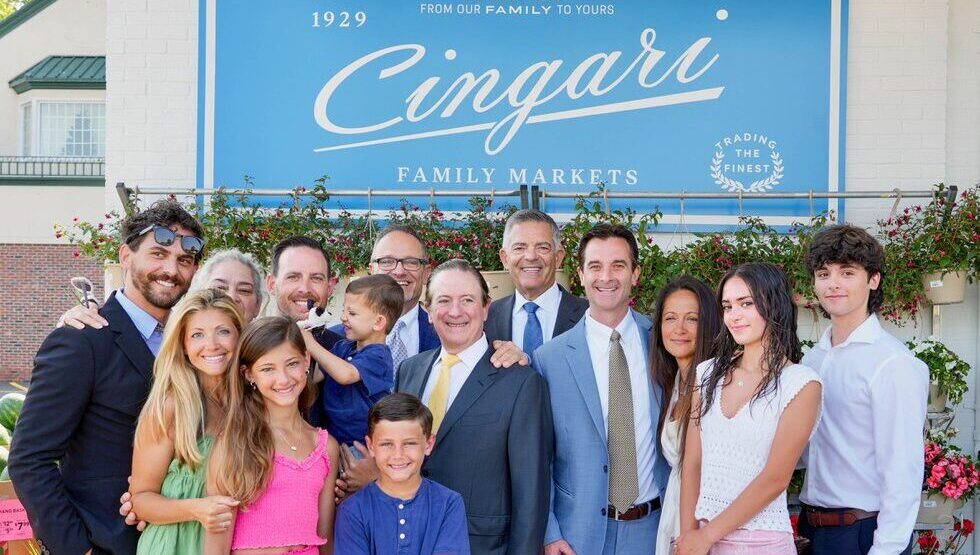
Cingari Family Markets, a fourth-generation family-owned and -operated Connecticut-based supermarket company, was named “Business of the Year” by the Fairfield Chamber of Commerce on June 26 at the 79th Annual Member Recognition and Awards Dinner.

Tom Cingari Jr., VP of produce, floral and e-commerce, accepted the award at Bridgeport’s Black Rock Yacht Club.

The chamber’s “Business of the Year” Award celebrates a company that has demonstrated exceptional growth, strong community leadership and a positive economic impact.

Over its nearly century‑long history, Cingari Family Markets has expanded to include 10 ShopRite stores and two Cingari Family Markets across southwestern Connecticut.

The family has invested in store renovations, expanded local hiring and training programs and contributed more than $5 million through the Cingari Family Foundation to support area schools, food pantries and healthcare institutions.

“This recognition reflects the efforts of our entire team,” said Thomas Cingari Sr., president and CEO of Cingari Family Markets.

“Our associates’ dedication to quality, innovation and service is what truly sets us apart. We sincerely appreciate the chamber’s acknowledgement and are grateful to the Fairfield community for supporting our family business.”

About Cingari Family Markets

Based in Stamford, Cingari Family Markets is known for its selection of fresh, locally-sourced and homemade prepared meals, along with a curated range of pantry items.

The company is committed to enhancing the local shopping experience, supporting sustainable practices and giving back to communities. It has been recognized as a 2024 Top Connecticut Workplace by Hearst CT Media.

Original article found on The Shelby Report.

Stop & Shop Donates Lottery Commission to Newington School District

NEWINGTON, Conn. (WTNH) — When someone hits it big on a lottery win in Connecticut, it’s not just the customer that goes home with something.

The store that sold the winning ticket gets a “retailer bonus” too.

So when Stop & Shop in Newington sold a million-dollar scratch game ticket in April, the company got a $10,000 pay out from CT Lottery.

On Wednesday, company leaders announced they’re donating those winnings to Newington School District to cover unpaid meal balances for the current school year and help with next year.

The company plans to present a check to the district at Anna Reynolds Elementary School Thursday morning.

Original article found on News 8 WTNH.

Grade A Markets Renovating ShopRite In Derby

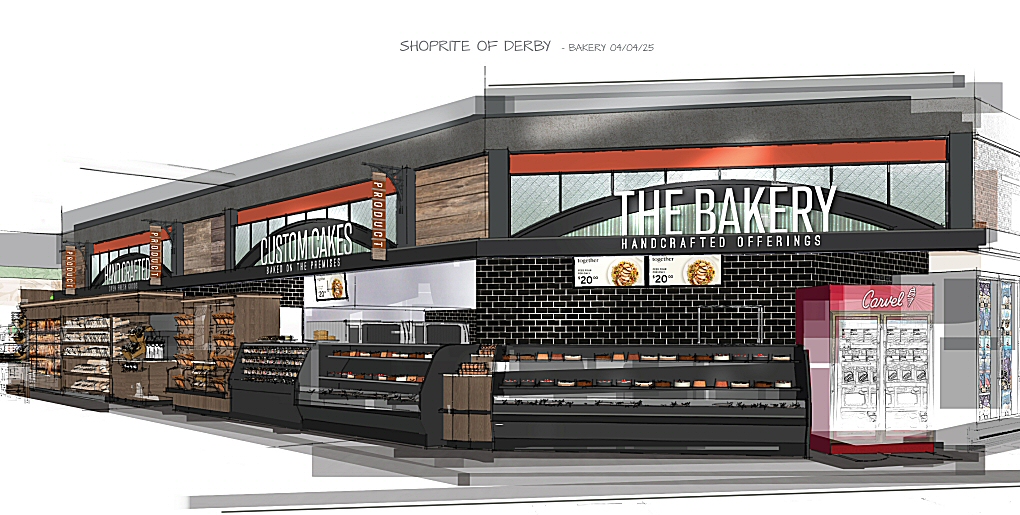
Cingari Family Markets has begun renovating the ShopRite at 49 Pershing Drive in Derby, Connecticut.

The updates will introduce a fresh, contemporary store design, along with expanded departments and upgraded amenities that provide greater convenience, variety and an elevated shopping experience.

Construction is expected to wrap up by late spring. The store will remain open throughout the renovation, with work primarily scheduled during overnight hours to minimize disruption. A grand reopening celebration will be held when the remodel is complete.

“My family’s goal has always been to create a welcoming and enjoyable shopping experience for our customers,” said Thomas Cingari Sr., president and CEO of Cingari Family Markets.

“With this renovation, we’re enhancing our offerings to better serve the Derby community – providing more varieties of fresh, high-quality foods and convenient meal solutions, and a modernized look and feel that makes shopping easier for the busy families that walk through our doors.”

New features and upgrades 

  • Expanded grab-and-go meal options – This will introduce a greater variety of fresh, ready-to-eat selections, including premium take-and-bake seafood, marinated meats and gourmet-prepared entrées designed for convenience without sacrificing quality.
  • Enhanced floral and produce departments – Customers will find an upgraded floral section, and a reimagined produce department featuring a wider selection of locally sourced and organic fruits and vegetables.
  • Upgraded specialty departments – The bakery, seafood, deli and dairy departments will be redesigned to offer a broader selection of products, with a focus on freshness, artisanal options and customer favorites.
  • Sustainability improvements – The store will incorporate modern refrigeration and freezer units, reducing energy consumption while enhancing product quality. Aisle shelving will also be outfitted with energy-efficient lighting for better product visibility.

The project is part of Cingari Family Markets’ broader initiative to modernize and enhance its stores across Connecticut, ensuring that each location continues to meet the evolving needs of its customers.

“We are proud to continue investing in our stores and the communities we serve,” Cingari said. “The Derby store will reflect the best of what Cingari Family Markets has to offer — top-quality products, outstanding service and a shopping experience that our customers can truly enjoy.”

Family-owned and operated for more than 90 years, Cingari Family Markets owns 10 ShopRites and two Cingari Family Markets in southwestern Connecticut.

Original article found at the The Shelby Report.

Digital Doupon Kiosks

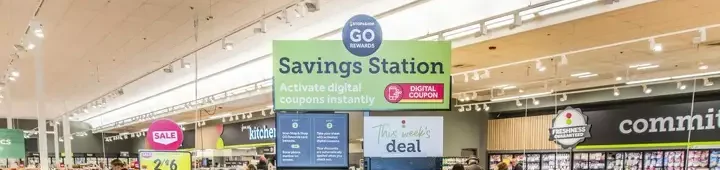
Connecticut’s largest grocery chain, Stop & Shop, will roll out in-store kiosks by the end of the week to make digital coupons more easily accessible to all customers.

The kiosks, which the Massachusetts-based chain refers to as Savings Stations, allows customers to activate all weekly circular digital coupons and personalized offers without having access to a smartphone, internet service, or a computer. Company officials say the kiosks ensure that all customers can easily access the same savings that are available through Stop & Shop’s digital offers.

To access their digital coupons, Stop & Shop customers can either scan their GO Rewards loyalty card or enter their phone number. Customers will receive a printout of the digital coupons that have been loaded onto their loyalty card for reference while shopping. The savings will be automatically applied at the checkout when shoppers scan their loyalty card or enter their phone number.

Roger Wheeler, Stop & Shop’s president, said the kiosks are designed to “improve the shopping experience for our customers.”

“We heard from customers who felt they were missing out on valuable digital coupon savings,” Wheeler said. “The Savings Station is our response to that feedback. It ensures that our customers can easily access all of our great deals, especially during the holiday season when savings are top of mind.”

Edgar Dworsky, the founder of ConsumerWorld.org, an advocacy group for shoppers, said Stop & Shop’s kiosks make “digital coupons more accessible to everyone, including the many seniors and low-income folks who lack internet or smartphone access.”

Stop & Shop’s roll out of its Savings Stations comes as Connecticut lawmakers are considering legislation that would require grocery stores that use electronic coupons to make it easier for consumers to access them. The launch of the kiosks comes three months after Stop & Shop closed five under-performing stores in Connecticut and 32 similar locations across five states.

Stop & Shop has 83 stores in Connecticut and more than 350 locations across five states.

Wayne Pesce, president of the Connecticut Food Association, said Stop & Shop is joining other retailers who are making it easier for all shoppers to access digital coupons.

“Other retailers have some sort of program to claim savings that don’t require an individual to have a cell phone,” Pesce said.

Original article found at the New Haven Register.

Geissler’s Supermarkets Adds AI Shopping Carts

Nick Nickitas, general manager of local independent grocery at Instacart, sat down for a conversation with Bob Rybick, president and CEO of Geissler’s Supermarket, to discuss the strategy behind Geissler’s decision to replace a majority of their shopping carts with AI-powered smart Caper Carts, making them one of the first retailers in the U.S. to launch a dense deployment of smart Caper Carts.

A conversation on Geissler’s strategy to launch smart carts in their stores:

Nickitas: Hi Bob! Thanks for sitting down with me to discuss Geissler’s vision, experience and expected outcomes of launching smart carts in your stores. I’d like to start at the beginning and ask what made you interested in smart shopping cart technology as a local independent grocer?

Rybick: As a multi-generational, independent grocer, we are focused on finding the best offerings and technology to help our customers, team members and business. With so many technological advancements now available for the grocery industry, we wanted to find something that could hit several of our strategic focuses, including:

  • Enhancing the in-store experience for our customers;
  • Assistance in loss prevention; and
  • Helping grow revenue.

So, when we began exploring solutions to address our three strategic focuses, smart shopping carts emerged as a perfect fit. After evaluating our options, Caper Carts stood out as the most comprehensive solution.

Nickitas: Let’s dive deeper into those three strategic focuses then. How are you projecting that smart shopping carts will enhance the in-store experience for your customers?

Rybick: At launch, smart shopping carts will reduce lines and congestion in the store, creating a more enjoyable shopping experience for customers. The cart’s screen helps customers track their running total in real-time, helping them stay on budget. The screen also offers a Deals Hub – with digital coupons, aisle locations and loyalty program login to ensure we’re giving our customers all of the benefits they expect. Customers can also checkout directly on the Caper Cart with an integrated payment terminal, ensuring a seamless process. Our customers expect us to continually offer them first class in-store shopping experience and we feel implementing Caper Carts will drastically help with that.

Nickitas: One of the biggest concerns that retailers have with self-checkout experiences are with shrink/loss prevention. How do you project smart carts helping with that?

Rybick: Caper has a number of built in features that make it plug-and-play for loss prevention assistance. All together, these carts collectively have more safeguards to prevent theft than traditional self-checkout. For example, with Caper Carts specifically, the cart doesn’t just scan an item’s barcode, it recognizes it with the built-in computer vision cameras, taking into account item attributes so customers don’t scan one item, but put a different item in their basket. Additionally, the Caper Cart has a scale built-in to the bottom of the cart basket, allowing for accurate measures of weighted items. Lastly, Caper Carts have an audit system that flags carts based on our audit preferences, which are then checked by a store employee, or when notable items are added to the cart.

Nickitas: And finally, I want to talk about ROI. Most grocers are wondering how to think about profitability with smart carts. Do you expect Caper to affect your revenue growth?

Rybick: Yes, in so many ways. The engaging customer experience of the smart cart has already proven to drive a larger basket size. In addition to that, our smart carts offer gamification features, such as a “spin the wheel” feature that unlocks Caper Cart-only coupons for instant dollars off a customer’s shop. Furthermore, the cart’s screen is a new surface for the future potential of serving relevant, personalized ads directly to our customers at the point of purchase. These ads would help generate a new revenue stream that can help offset the implementation cost of smart carts.

Nickitas: Now let’s pivot to the technical side of smart cart implementation. What were your questions coming into this initiative on how it would affect your current tech stack, store operations and ongoing maintenance?

Rybick: We had many questions about this, as we aimed to ensure a seamless launch of smart carts in our stores, especially with our want to replace a majority of our carts with smart carts. Our key questions included:

  • How difficult is it going to be to integrate smart carts into our catalog and POS systems?
  • Would there be any technical requirements or store modifications needed?
  • What does the ongoing maintenance look like for these products?

Nickitas: And what did you find to be the answers to those questions?

Rybick: The answers were a lot less cumbersome than one might think. It all came down to picking the right smart cart and the right company to partner with, for Geissler’s that was Instacart’s Caper Cart. With our chosen smart cart, integrating into our existing catalog to ensure all our SKUs would be recognized easily by the smart cart while customers are shopping was handled without issue. Our partner company integrates with all the leading POS systems in grocery, so that was also an easy check off.

Myself and the Geissler’s team were surprised at the minimal amount of technical requirements and store modifications needed to implement something as big and widely used as new shopping carts. Basically all we needed was an internet connection to get the smart carts connected and an area in the store for the carts to charge. Since regular shopping carts already have a bay, we were able to make that the charging area, as Caper Carts have the ability for nested charging. We do also have a smart cart checkout priority lane, which wasn’t a big deal to implement. We did add some in-store signage to help educate our customers on the smart carts, but the lift there was also minimal.

And lastly, for the ongoing maintenance, Instacart has remote management personnel and software for easily auditing each Caper Cart, as well as providing software updates as needed. For the physical cart maintenance, Instacart manages that ongoing, alleviating that potential stress from our teams.

Nickitas: I appreciate all you said and just have one more question. What would you tell other local, independent grocers who are considering smart cart technology for their stores?

Rybick: I think local, independent grocers have such an exciting opportunity to be the leaders in innovation in this space. The ability to be nimble and have an outsized impact on their business with new technology shouldn’t be dismissed and just because a solution or product uses AI doesn’t mean it’s out of reach for our peers. I’d tell other local, independent grocers who are considering smart cart technology for their stores that the benefits of incorporating smart carts into their short- and long-term business strategies are too great to ignore. From the customer impact, store impact and revenue opportunities through increased basket sizes and retail media network/advertising, paired with the lower than expected lift to actually launch smart carts in store, it seems to me a no brainer that smart carts should be on all local, independent grocers’ strategic radar with a push on sooner rather than later.

Original article found at The Shelby Report.

How Geissler’s Supermarkets Added Shopping Carts With AI

Nick Nickitas, general manager of local independent grocery at Instacart, sat down for a conversation with Bob Rybick, president and CEO of Geissler’s Supermarket, to discuss the strategy behind Geissler’s decision to replace a majority of their shopping carts with AI-powered smart Caper Carts, making them one of the first retailers in the U.S. to launch a dense deployment of smart Caper Carts. A conversation on Geissler’s strategy to launch smart carts in their stores:

Nickitas: Hi Bob! Thanks for sitting down with me to discuss Geissler’s vision, experience and expected outcomes of launching smart carts in your stores. I’d like to start at the beginning and ask what made you interested in smart shopping cart technology as a local independent grocer?

Rybick: As a multi-generational, independent grocer, we are focused on finding the best offerings and technology to help our customers, team members and business. With so many technological advancements now available for the grocery industry, we wanted to find something that could hit several of our strategic focuses, including:

  • Enhancing the in-store experience for our customers;
  • Assistance in loss prevention; and
  • Helping grow revenue.

So, when we began exploring solutions to address our three strategic focuses, smart shopping carts emerged as a perfect fit. After evaluating our options, Caper Carts stood out as the most comprehensive solution.

Nickitas: Let’s dive deeper into those three strategic focuses then. How are you projecting that smart shopping carts will enhance the in-store experience for your customers?

Rybick: At launch, smart shopping carts will reduce lines and congestion in the store, creating a more enjoyable shopping experience for customers. The cart’s screen helps customers track their running total in real-time, helping them stay on budget. The screen also offers a Deals Hub – with digital coupons, aisle locations and loyalty program login to ensure we’re giving our customers all of the benefits they expect. Customers can also checkout directly on the Caper Cart with an integrated payment terminal, ensuring a seamless process. Our customers expect us to continually offer them first class in-store shopping experience and we feel implementing Caper Carts will drastically help with that.

Nickitas: One of the biggest concerns that retailers have with self-checkout experiences are with shrink/loss prevention. How do you project smart carts helping with that?

Rybick: Caper has a number of built in features that make it plug-and-play for loss prevention assistance. All together, these carts collectively have more safeguards to prevent theft than traditional self-checkout. For example, with Caper Carts specifically, the cart doesn’t just scan an item’s barcode, it recognizes it with the built-in computer vision cameras, taking into account item attributes so customers don’t scan one item, but put a different item in their basket. Additionally, the Caper Cart has a scale built-in to the bottom of the cart basket, allowing for accurate measures of weighted items. Lastly, Caper Carts have an audit system that flags carts based on our audit preferences, which are then checked by a store employee, or when notable items are added to the cart.

Nickitas: And finally, I want to talk about ROI. Most grocers are wondering how to think about profitability with smart carts. Do you expect Caper to affect your revenue growth?

Rybick: Yes, in so many ways. The engaging customer experience of the smart cart has already proven to drive a larger basket size. In addition to that, our smart carts offer gamification features, such as a “spin the wheel” feature that unlocks Caper Cart-only coupons for instant dollars off a customer’s shop. Furthermore, the cart’s screen is a new surface for the future potential of serving relevant, personalized ads directly to our customers at the point of purchase. These ads would help generate a new revenue stream that can help offset the implementation cost of smart carts.

Nickitas: Now let’s pivot to the technical side of smart cart implementation. What were your questions coming into this initiative on how it would affect your current tech stack, store operations and ongoing maintenance?

Rybick: We had many questions about this, as we aimed to ensure a seamless launch of smart carts in our stores, especially with our want to replace a majority of our carts with smart carts. Our key questions included:

  • How difficult is it going to be to integrate smart carts into our catalog and POS systems?
  • Would there be any technical requirements or store modifications needed?
  • What does the ongoing maintenance look like for these products?

Nickitas: And what did you find to be the answers to those questions?

Rybick: The answers were a lot less cumbersome than one might think. It all came down to picking the right smart cart and the right company to partner with, for Geissler’s that was Instacart’s Caper Cart. With our chosen smart cart, integrating into our existing catalog to ensure all our SKUs would be recognized easily by the smart cart while customers are shopping was handled without issue. Our partner company integrates with all the leading POS systems in grocery, so that was also an easy check off.

Myself and the Geissler’s team were surprised at the minimal amount of technical requirements and store modifications needed to implement something as big and widely used as new shopping carts. Basically all we needed was an internet connection to get the smart carts connected and an area in the store for the carts to charge. Since regular shopping carts already have a bay, we were able to make that the charging area, as Caper Carts have the ability for nested charging. We do also have a smart cart checkout priority lane, which wasn’t a big deal to implement. We did add some in-store signage to help educate our customers on the smart carts, but the lift there was also minimal.

And lastly, for the ongoing maintenance, Instacart has remote management personnel and software for easily auditing each Caper Cart, as well as providing software updates as needed. For the physical cart maintenance, Instacart manages that ongoing, alleviating that potential stress from our teams.

Nickitas: I appreciate all you said and just have one more question. What would you tell other local, independent grocers who are considering smart cart technology for their stores?

Rybick: I think local, independent grocers have such an exciting opportunity to be the leaders in innovation in this space. The ability to be nimble and have an outsized impact on their business with new technology shouldn’t be dismissed and just because a solution or product uses AI doesn’t mean it’s out of reach for our peers. I’d tell other local, independent grocers who are considering smart cart technology for their stores that the benefits of incorporating smart carts into their short- and long-term business strategies are too great to ignore. From the customer impact, store impact and revenue opportunities through increased basket sizes and retail media network/advertising, paired with the lower than expected lift to actually launch smart carts in store, it seems to me a no brainer that smart carts should be on all local, independent grocers’ strategic radar with a push on sooner rather than later.

Original article found at The Shelby Report.

Big Y Opens New Market In Middletown, CT

Big Y has opened a new market at 850 S. Main St. in Middletown, Connecticut, the second of three new locations coming to the state this year.

The Middletown Big Y market offers an on-site bakery with hand-decorated cakes and specialty baked goods, such as signature snowflake rolls, along with full-service butcher and seafood departments with six deliveries of fresh, sustainable seafood every week.

The kitchen and deli feature ready-to-heat, -eat or -cook Big Y Quick, Easy Meals including hand-tossed pizza available by the slice or whole pie, freshly made sushi, made-to-order subs and paninis with Boar’s Head Premium meats and cheeses. A selection of Boar’s Head products are also available sliced or pre-packaged in the deli.

It has a wide assortment of products and specialty items from local partners, including Arethusa Farm old-fashioned-style ice cream and specialty cheeses, Bear’s seasoned wings, Liuzzi Italian specialties, Hummel Bros. frankfurters and quality meat products and Lamberti sausage, Deep River chips, Lyman Orchards apples and pies, Gina Marie Bakery traditional Italian products and Chabaso Bakery artisan breads.

“All of us at Big Y are very excited to serve and be a part of the Middletown community with our unique fresh and local offerings, trained experts and state of the art facility,” said Michael P. D’Amour, president and CEO of Big Y. “We are proud of our exceptional and knowledgeable employees who are poised and ready to provide our Middletown customers with a remarkable and personalized shopping experience.”

The company broke ground on the project in April 2023. The building offers new green features like eco-friendly equipment, including energy-efficient refrigerated cases, a full- store generator and electric vehicle charging stations in the parking lot. This and other recent store designs are part of the company’s broader strategy to modernize its retail spaces for customers and employees.

Grand opening festivities begin on July 11 and will include giveaways, offers and sample tastings. New myBigY members will receive 500 myBigY Rewards points for signing up. Discounts are available every day for myBigY members using their membership, based upon their grocery purchases.

This is the second market to open in the state this year. The Brookfield, Connecticut, location opened its doors in May. New locations are also underway in Westport, Connecticut, and Uxbridge, Massachusetts. These locations will bring Big Y’s number of supermarkets to 77.

Original article found at The Shelby Report.

Cingari Family Markets To Unveil New Identity, 2 Remodeled Stores

Cingari Family ShopRite, which owns and operates 12 ShopRite locations in Connecticut, is introducing a new “Cingari Family Markets” identity and a range of new, branded products.

Additionally, Cingari Family Markets will open two remodeled stores on June 17-18 – the ShopRite of Commerce Street and Grade A Market on Newfield Avenue in Stamford, Connecticut.

The ShopRite of Commerce Street, located at 1990 W Main St., will reopen on June 17 at a ribbon cutting ceremony at 9 a.m. with Stamford Mayor Caroline Simmons and members of the chamber of commerce. The community celebration will include family activities, a balloon artist, cupcake decorating and food samplings.

The supermarket has an upgraded, sleek exterior facade, modern interior décor and transformed produce, meat, seafood and bakery departments. The store also will feature “The Grill,” a new dine-in and take-out experience, a dedicated cheese monger, full-service butcher, expanded take-and-bake seafood options and a beer and craft brew center.

“We are thrilled to open the doors to a brand new shopping destination,” said Tom Cingari Sr., president and CEO of Cingari Family Markets. “The renovations have allowed us to create an unmatched experience with incredible service, quality and convenience for our customers.”

The Cingari family also will celebrate the opening of its renovated Grade A Market store at 9 a.m. on June 18 at 563 Newfield Ave. in Stamford. A Boars Head food truck will be on-site on grand reopening day to serve hot dogs and other samples to customers.

The store refresh brings updated décor and enhancements to the produce, seafood, floral and meat departments, as well as sustainable refrigerators and freezers throughout the store.

“The Newfield Avenue store has been an area staple for decades,” Cingari said. “These upgrades will allow us to continue providing the outstanding service and convenience customers expect, now within a completely modernized shopping environment.”

In addition to the remodeled stores, the grocer has also launched a range of gourmet prepared foods and products marketed under the Cingari Family Markets brand, including:

  • Ready-to-eat, restaurant-quality prepared meals;
  • Fresh-cut, pre-packaged produce;
  • Read to cook, marinated and seasoned premium meats;
  • Italian-imported organic extra virgin olive oil;
  • Italian-imported organic balsamic vinegar;
  • Jarred marinara sauce;
  • Jarred vodka sauce;
  • Organic coffees; and
  • Locally-brewed beers.

The chef-created line reflects the Cingari family’s Italian heritage and its decades-long commitment to quality and excellence. It also features a newly designed Cingari Family Markets’ logo inspired by the family business’ origin.

“The Cingari Family Markets products pay homage to our family’s history, and the new logos are inspired by the original design, materials and colors my grandfather used for the very first store, while embracing a modern aesthetic,” Cingari said.

“Everything we do is built on the expertise and heritage of our family, now spanning four generations. As new Cingari generations come in, we modernize our approach to meet the needs of our customers while staying true to our core values.”

Family-owned and operated for more than 90 years, Cingari Family Markets owns 10 ShopRite stores and two Grade A Market supermarkets across southwestern Connecticut.

Original article found at The Shelby Report.