

Summer is winding down, primary season is over (see our recap hereand the race for governor is officially set: Democratic Gov. Ned Lamont against Republican state Sen. Ryan Fazio.
Having won his primary convincingly, Lamont enters the general election as the clear favorite. He’s personally popular and is running for re-election on a landscape where Democrats have won every single statewide federal and gubernatorial election in Connecticut for nearly two decades.
But Democrats might be wise to not take that advantage for granted because races for Governor in Connecticut are actually more competitive than our coastal blue-state reputation suggests. Three of the last four were decided by roughly three points or less: Malloy won by less than a point in 2010 and 2.6 points in 2014, while Lamont won his first term by just over three points in 2018. Lamont’s nearly 13-point reelection victory in 2022 (on the heels of the pandemic and broader mail-in voting) was the exception.
That history makes the underlying mood of the electorate worth paying attention to. And our latest polling suggests Connecticut voters are sending a remarkably consistent message about what they want this election to be about: the cost of living.
When we asked voters to name the three most important issues influencing their vote, 58% chose inflation and the cost of living – more than any other issue.
Taxes ranked second at 49%. Energy and utility costs were third at 43%. Healthcare was fourth at 39%. Housing costs came in at 28%.
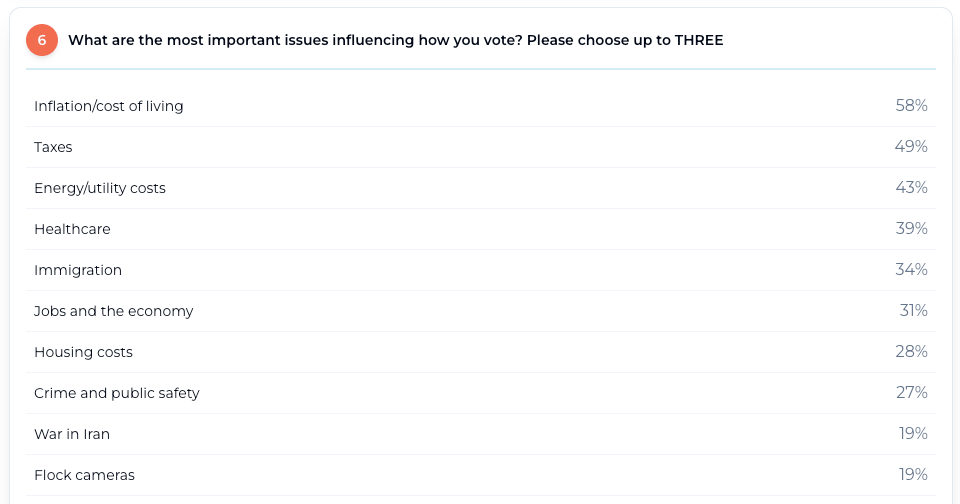
Put differently, five of voters’ eight highest-ranking concerns are directly connected to what it costs to live, work and raise a family in Connecticut.
That should shape how both candidates think about the next two months.
For Fazio, the strategy is fairly obvious.
A Republican running statewide in Connecticut faces significant structural challenges, and Fazio will need voters who don’t typically support Republican candidates to give him a serious chance in a challenging environment nationally for Republicans. But, affordability gives him an opening to make that case.
Fazio has already emphasized electricity rates, taxes and the broader cost of living which are among the dominant concerns of the entire electorate, not just Republicans.
Still, recognizing a problem and persuading voters that you can solve it are two different things. Fazio will need to convince voters who may be frustrated by Connecticut’s cost of living that replacing Lamont with a Republican governor would actually make their lives more affordable. That is a much higher bar.
Lamont faces almost the opposite challenge. While he has significant advantages, he cannot afford to treat voters’ legitimate and persistent economic anxiety as disconnected from his record simply because Connecticut’s fiscal condition has improved during his tenure.
Balanced budgets, strong reserves and tax cuts are meaningful accomplishments. But voters don’t experience the economy through the state balance sheet. They experience it in their everyday lives when they open their electric bill, pay their property taxes, look for a house or apartment, buy groceries or pay for healthcare.
For Lamont, the opportunity is connecting the state’s improved and stable fiscal position to the ability to urgently tackle the costs families are still struggling with every day in another term.
Finally, there’s another number Fazio has to worry about.
In our poll, 32% of voters identify as strong Democrats, compared with 21% who identify as strong Republicans. Once you factor in weaker partisans and independents who lean toward one party, the electorate is 51% Democratic or Democratic-leaning, compared with 38% Republican or Republican-leaning.
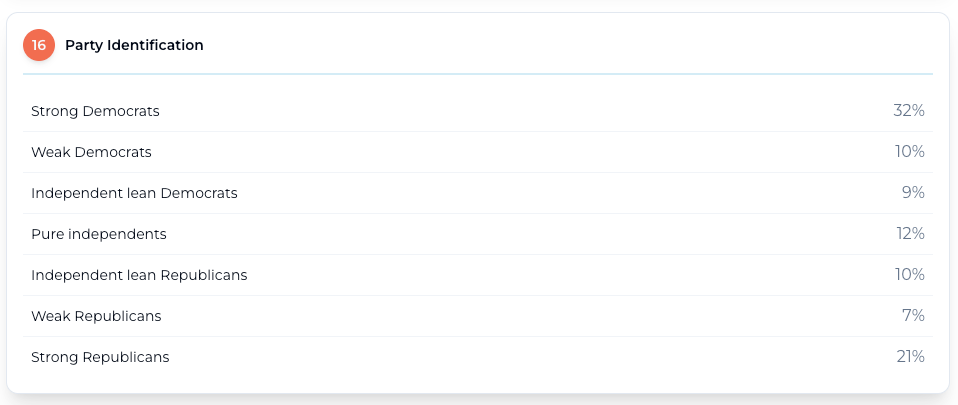
Fazio cannot simply consolidate Republicans and hope general dissatisfaction with the cost of living does the heavy lifting for him. He needs to win pure independents, hold virtually all Republican-leaning voters and make meaningful inroads among voters who would historically lean Democratic.
That is a substantial hill for any Republican nominee to climb, let alone one in a tough national political environment for the party. Donald Trump remains an unavoidable part of the political landscape. Should Fazio separate himself enough from an unpopular national Republican brand to appeal to Connecticut’s large bloc of Democratic-leaning and unaffiliated voters? Will that risk alienating the Republican voters he needs as his base? Will he incur Trump’s personal wrath?
Lamont, meanwhile, has an opportunity to make the election a choice by contrasting Connecticut with Trump’s Washington and still keeping his campaign grounded in the economic concerns voters say matter most.
So, where does that leave things with just over two months until Election Day?
Voters are clear the cost of living is their defining issue, and no ideological argument comes close.
Lamont needs to argue that he’s making a difference on affordability issues that are largely driven by Trump while not letting Fazio detach himself from the head of his party.
And for all the attention that will inevitably be paid to Trump, immigration, crime and the daily back-and-forth of the campaign, Connecticut voters are telling us pretty clearly what they want their next governor focused on: make it less expensive to live here.
Original article found on Substack
